Rare Maps and Prints
- World & Celestial
- North America
- West Indies, South & Central America
- British Isles
- All
- British Isles
- English counties
- All
- Large-scale
- Chez P. Mortier
- Bedfordshire
- Berkshire
- Buckinghamshire
- Cambridgeshire
- Cheshire
- Cornwall
- Cumberland
- Derbyshire
- Devon
- Dorset
- Durham
- Essex
- Gloucestershire
- Hampshire
- Herefordshire
- Hertfordshire
- Huntingdonshire
- Islands
- Kent
- Lancashire
- Leicestershire
- Lincolnshire
- Middlesex
- Norfolk
- Northamptonshire
- Northumberland
- Nottinghamshire
- Oxfordshire
- Rutland
- Shropshire
- Somerset
- Staffordshire
- Suffolk
- Surrey
- Sussex
- Warwickshire
- Westmoreland
- Wiltshire
- Worcestershire
- Yorkshire
- Wales
- Scotland
- Ireland
- Western Europe
- Eastern Europe
- Middle East
- Africa
- Asia
- Australasia & Pacific
- Decorative Prints
- Title Pages
Mr. Philip D. Burden
P.O. Box 863,
Chalfont St. Giles, Bucks HP6 9HD,
UNITED KINGDOM
Tel: +44 (0) 1494 76 33 13
Email: enquiries@caburden.com


Browser update recommended.
The high-resolution zoom viewer uses the WebP image format for newer maps. Your browser does not support it — some maps may fail to render. Please update to a current version of Chrome, Firefox, Safari (14+), or Edge. Older JPG-tiled maps continue to display normally.
Mark Catesby’s work is “the most famous colour plate book of American plant and animal life” (Hunt), the first American colour plate book of flora and fauna and made a major contribution to the study of natural sciences. Mark Catesby (1683-1749) was born 24 March 1683 to John Catesby a lawyer and Elizabeth Jekyll, both of prominent families in Castle Hedingham, Essex. He studied natural science in London but otherwise had limited formal education. Perhaps influenced by Sir Hans Sloane’s “A Voyage to the Islands of Madera, Barbados, Nieves …” published in 1707 and the presence of his sister in the American colonies he made the first of two trips 1712-19. He arrived on the 23 April 1712 and visited his sister Elizabeth Cocke in Williamsburg, Virginia, wife of Dr. William Cocke secretary to the Governor of the colony at the time. His position afforded Catesby numerous introductions to the prominent Americans of the day. He made a voyage to the West Indies in 1714 but otherwise remained in Virginia sending back seeds and on his return in 1719 carried back specimens to Sir Hans Sloane, President of the Royal Society and Dr William Sherard. His return to England and the samples he had supplied opened doors to sponsorship and encouragement for a second voyage this time with the purpose of a publication about the natural history of the south east American colonies. His second voyage 1722-26 began on his arrival in Charleston in May 1722. He travelled through the Carolinas including Georgia as it would become in 1733, Florida and the Bahamas.
Returning to London in 1726 he started work on the preparation for his book which would consume the next twenty years of his life. Dunthorne notes that ‘he learned to etch, “but not in ‘graver-like manner,’ choosing rather to omit cross-hatching,” as he was afraid that if he turned his drawings over to an engraver they would lose much of their accuracy, so he preferred to etch them himself’. He studied under Joshua Goupy and produced all but three plates. The remaining were the work of the great George D. Ehret (plates 61, 80 and 96 in the second volume), the first two of the Magnolia are considered magnificent works of art (Hunt) and are the first prints of the plant. The source for Catesby’s map is Henry Popple’s great wall map of 1733 and for the region of the Carolina’s originally the source is Colonel John Barnwell’s manuscript of c.1721-24. The ‘List of Subscribers’ identifies a total of 166 copies of the book for 155 individuals. Further copies were printed as can be attested by the fact that upon Catesby’s death in 1749 there were eleven copies unsold in his estate. His widow sold a collection of his original drawings in 1768 to George III for £160 and they now survive in the Royal Collection at Windsor Castle.
This example lacks the list of ‘encouragers’ which may well have been one of the last items printed. Its omission is not unknown according to Leslie Overstreet, Curator of Natural History Rare Books at the Smithsonian Institute. This example bears the variant imprint to the second volume as reported in ESTC T147031 reading ‘London: Printed at the Expence of the Author: and sold by W. Innys, R. Manby, Mr. Hauksbee, and by the author.’ However it conforms to T147030 with the last line of French text to plate 9 of the first volume beginning ‘l’hiver’, there are three settings recorded. The Smithsonian Institute’s example includes a printed slip of paper believed to have been sent to subscribers at the completion of the first volume which states that a map was to be produced at the end of volume two but was intended to be bound in volume one, as here. An examination of the 155 subscribers does not identify the Percy family as one. However there are some apparent agents named and we know that some examples were available to non-subscribers. Evidence to support its original acquisition by the family comes from the fact that in this particular example a manuscript annotation has been added to the foot of title page in volume one listing who it was sold by. It reads ‘& by I Hildyard at York’ indicating a northern sale. John Hildyard (1701-57) was from a noted family of booksellers in the city whose shop was the Bible at 23 Stonegate.
Provenance: Hugh Percy, 1st Duke of Northumberland (c.1714-86), bookplate and Percy family arms in gilt on covers; thence by descent to the current 12th Duke of Northumberland, Ralph George Algernon Percy (1956-), Alnwick Castle, Northumberland; sold Sotheby’s London 4 November 2014 lot 26 to cover costs of flood damage in Newcastle. Anker 95; Cumming 210; De Belder 62; Dunthorne 72; ESTC T147030; Fine Bird Books, p.65; Great Flower Books, p.53; Hunt 486; Martin 65; McBurney ‘Mark Catesby’s Natural History of America’; Meyers & Pritchard ‘Empire’s Nature Mark Catesby’s New World Vision’ pp. 15-16, 92, 182; Nissen BBI 336, IVB 177; Pritchard and Sites, The Map Collector 56 p.12; Pritzel 1602; Sabin 11509; Schwartz & Ehrenberg pp. 151-2; Stafleu TL2 1057; Wood, p.282.
Returning to London in 1726 he started work on the preparation for his book which would consume the next twenty years of his life. Dunthorne notes that ‘he learned to etch, “but not in ‘graver-like manner,’ choosing rather to omit cross-hatching,” as he was afraid that if he turned his drawings over to an engraver they would lose much of their accuracy, so he preferred to etch them himself’. He studied under Joshua Goupy and produced all but three plates. The remaining were the work of the great George D. Ehret (plates 61, 80 and 96 in the second volume), the first two of the Magnolia are considered magnificent works of art (Hunt) and are the first prints of the plant. The source for Catesby’s map is Henry Popple’s great wall map of 1733 and for the region of the Carolina’s originally the source is Colonel John Barnwell’s manuscript of c.1721-24. The ‘List of Subscribers’ identifies a total of 166 copies of the book for 155 individuals. Further copies were printed as can be attested by the fact that upon Catesby’s death in 1749 there were eleven copies unsold in his estate. His widow sold a collection of his original drawings in 1768 to George III for £160 and they now survive in the Royal Collection at Windsor Castle.
This example lacks the list of ‘encouragers’ which may well have been one of the last items printed. Its omission is not unknown according to Leslie Overstreet, Curator of Natural History Rare Books at the Smithsonian Institute. This example bears the variant imprint to the second volume as reported in ESTC T147031 reading ‘London: Printed at the Expence of the Author: and sold by W. Innys, R. Manby, Mr. Hauksbee, and by the author.’ However it conforms to T147030 with the last line of French text to plate 9 of the first volume beginning ‘l’hiver’, there are three settings recorded. The Smithsonian Institute’s example includes a printed slip of paper believed to have been sent to subscribers at the completion of the first volume which states that a map was to be produced at the end of volume two but was intended to be bound in volume one, as here. An examination of the 155 subscribers does not identify the Percy family as one. However there are some apparent agents named and we know that some examples were available to non-subscribers. Evidence to support its original acquisition by the family comes from the fact that in this particular example a manuscript annotation has been added to the foot of title page in volume one listing who it was sold by. It reads ‘& by I Hildyard at York’ indicating a northern sale. John Hildyard (1701-57) was from a noted family of booksellers in the city whose shop was the Bible at 23 Stonegate.
Provenance: Hugh Percy, 1st Duke of Northumberland (c.1714-86), bookplate and Percy family arms in gilt on covers; thence by descent to the current 12th Duke of Northumberland, Ralph George Algernon Percy (1956-), Alnwick Castle, Northumberland; sold Sotheby’s London 4 November 2014 lot 26 to cover costs of flood damage in Newcastle. Anker 95; Cumming 210; De Belder 62; Dunthorne 72; ESTC T147030; Fine Bird Books, p.65; Great Flower Books, p.53; Hunt 486; Martin 65; McBurney ‘Mark Catesby’s Natural History of America’; Meyers & Pritchard ‘Empire’s Nature Mark Catesby’s New World Vision’ pp. 15-16, 92, 182; Nissen BBI 336, IVB 177; Pritchard and Sites, The Map Collector 56 p.12; Pritzel 1602; Sabin 11509; Schwartz & Ehrenberg pp. 151-2; Stafleu TL2 1057; Wood, p.282.
CATESBY, Mark
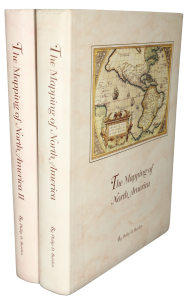
The Natural History of Carolina, Florida and the Bahama Islands: containing the figures of Birds, Beasts, Fishes, Serpents, Insects, and Plants.
Printed at the expense of the Author and sold by W. Innys, R. Manby, Mr Hauksbee and by the Author, London, 1731-43[48]
First edition, 2 volumes comprising 10 parts and an Appendix, folio (515 x 355 mm. each), eighteenth-century Russia gilt with Northumberland arms in gilt on upper covers, ornate gilt ribbed spine with gilt calf title labels affixed. Text in English and French, title-pages printed in red and black, dedication leaves, double-page hand-coloured engraved map, 220 hand-coloured engraved plates. Volume 1 pp. xii, (100), [Appendix] 20, (2) with 120 plates and Index bound at the end. Volume 2 pp. (4), (100), double page hand coloured map, xliv, (6), with 100 plates and a six page index at the back to both volumes. The first 20 page numbers of vol. 2 corrected by hand as usual, without the list of encouragers, occasional browning, vol. 2, p. 59 numbered 56, vol. 2, pl. 61 unnumbered; pl. 80 numbered 62 (the two Magnolia plates transposed, one cut close at top), volume two text block and spine cracked. Otherwise a good example as originally issued.
Stock number: 8312
SOLD